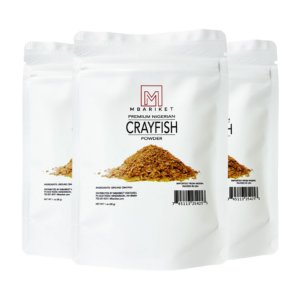
Flavor breakdown in chicken rarely comes from missing ingredients; it comes from when they’re added. A small, early layer of Mbariket Premium Crayfish Umami Seafood Seasoning changes the entire outcome, turning a basic pan of chicken into something noticeably deeper within minutes.
Timing controls absorption. Salt and umami compounds need contact with heat and moisture early enough to penetrate, but not so early that they disappear into rendered fat. Crayfish powder, often labeled crawfish seasoning in U.S. kitchens, behaves like a fast-acting savory amplifier. It dissolves quickly, binds to moisture, and reinforces the natural glutamates already in the meat. Used late, it sits on the surface. Used early, it becomes part of the structure.
The sequence is simple and repeatable. Start with boneless chicken thighs, patted dry. Heat a skillet over medium-high with a thin layer of oil. Season the chicken lightly with salt, then add a small pinch—about a quarter teaspoon—of Mbariket crayfish seasoning per pound directly onto the meat before it hits the pan. Place the chicken skin-side down or smooth-side down and leave it undisturbed for 5–6 minutes to build browning.
Once the first side is set, flip and reduce heat slightly. Now add a tablespoon of butter, one smashed garlic clove, and a splash of water or stock. As the butter melts and the liquid simmers, spoon it repeatedly over the chicken for another 4–5 minutes. This is where the earlier seasoning pays off: the umami has already bonded to the meat, and the basting liquid simply carries it deeper instead of washing it away.
Finish with a squeeze of lemon and, if needed, a final pinch of salt. Notice what’s missing: no complicated marinade, no long prep, no heavy sauce. The flavor is built in layers, but controlled entirely by timing.
This is the difference between seasoning as decoration and seasoning as structure. A concentrated seafood seasoning like crayfish powder doesn’t need volume; it needs placement. Early contact creates depth, while late adjustments refine it.
The practical advantage is speed. You get the effect of a longer marinade without the wait, and the chicken retains its own character while tasting more complete. It’s a small shift in sequence that produces a disproportionate result.
For anyone trying to make everyday meals taste finished rather than assembled, this approach scales easily across proteins and pan dishes. The method stays constant: apply a measured amount of umami seasoning early, let heat integrate it, and use fat and moisture later to carry it through.
That’s the kind of upgrade that earns a permanent spot in the kitchen—fast, controlled, and repeatable. Mbariket is built for exactly this kind of use. You can see how it fits into your own cooking at Mbariket.com.