I’ve spent a large part of my professional life thinking about a simple question that most cooks rarely phrase out loud: why do some dishes feel complete while others feel unfinished even when every expected ingredient is present?
The answer, more often than not, is density of flavor.
A dish can have salt, aromatics, fat, and heat and still taste thin. The structure is there, but the depth is missing. When cooks describe food as “restaurant quality,” what they are often reacting to is not technique alone but concentration—the quiet presence of ingredients that deepen savory flavor without announcing themselves.
Professional kitchens solve this problem in predictable ways. They reduce stocks. They roast bones. They build sauces that simmer for hours. In other words, they concentrate flavor until even a small spoonful carries weight.
Home kitchens rarely have the time or the inclination for that kind of reduction.
So the practical question becomes: how does a serious home cook introduce that same depth without building a stockpot every night?
The answer usually lives in the pantry.
A well‑chosen concentrated seasoning can function as a kind of shortcut to flavor density. Not the loud kind of seasoning that overwhelms a dish, but the quiet kind that widens the flavor underneath everything else. Anchovies do this. Parmesan rinds do it in soup. A spoon of miso in a sauce performs the same quiet engineering.
Seafood seasoning built around concentrated shellfish performs a similar role, though many cooks still associate it only with seafood boils or coastal cooking. That assumption misses its real usefulness.
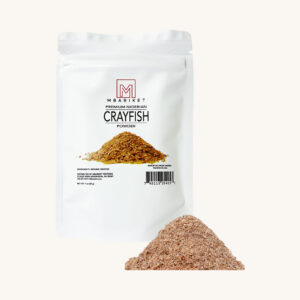
Umami seafood seasoning is essentially a concentrated savory ingredient made from dried and ground shellfish such as crayfish or crawfish. Because shellfish naturally contain glutamates and nucleotides—two compounds that intensify savory taste—a small amount of finely milled crayfish seasoning acts as a flavor amplifier inside a dish. It dissolves easily into soups, sauces, rice, eggs, vegetable sautés, and grilled foods, adding depth rather than overt seafood flavor. The result is not a dish that tastes like shellfish, but one that tastes fuller, rounder, and more complete.
Once cooks understand that principle, the applications become obvious.
A pot of beans suddenly tastes slower cooked than it actually was. Fried rice develops the kind of savory base people usually attribute to restaurant woks. Scrambled eggs take on a deeper character with only a pinch added to the pan.
None of these dishes become “seafood dishes.” They simply become more satisfying.
This is the difference between seasoning for salt and seasoning for structure. Salt sharpens flavor, but umami ingredients give the flavor somewhere to stand.
I often describe this to cooks as building the floor of a dish. Herbs, citrus, and spices decorate the room, but the umami base is the floor everything sits on. Without it, flavors float around without connection.
Concentrated crayfish seasoning happens to be one of the most efficient tools for building that floor because it carries the natural complexity of shellfish in a form that disperses instantly. You don’t need long cooking times. The flavor is already condensed.
That realization is what pushed me to develop Mbariket Premium Crayfish Umami Seafood Seasoning in the first place. I wanted a pantry ingredient that cooks could reach for the way chefs reach for anchovy paste or finishing salt—something that quietly upgrades everyday cooking without requiring explanation.
What I’ve found most interesting since introducing it is where people end up using it.
Not just in seafood dishes.
Rice is probably the most common surprise. A half teaspoon stirred into a pot while it cooks produces a savory backbone that makes the grains taste fuller even before anything else is added. The same thing happens in simple tomato sauces, where the seasoning rounds the acidity without dulling it.
Eggs respond almost instantly. A light pinch in scrambled eggs creates a kind of savory echo that lingers after each bite. Grilled vegetables pick up a deeper roasted quality when the seasoning is blended into oil before brushing the pan or grill.
The pattern repeats across kitchens: cooks discover that the ingredient is less about seafood and more about amplification.
That’s the larger shift happening in American home cooking right now. People are paying closer attention to flavor architecture. They want pantry ingredients that do real work rather than simply adding another layer of spice.
A concentrated seafood seasoning fits neatly into that mindset because it solves a structural problem in cooking. It provides the background note that allows the rest of the ingredients to feel more intentional.
And the best part is how little you need.
In most dishes the difference between flat and finished is measured in fractions of a teaspoon.
That small spoonful is often the entire story.
For cooks who enjoy thinking about flavor this way, I always encourage a little experimentation. Stir a pinch into soup just before serving. Add a touch to the oil for grilled chicken or vegetables. Blend it into rice, beans, or simple pan sauces and pay attention to how the dish settles into itself.
That kind of curiosity is how better cooking habits form—quietly, one adjustment at a time.
For those interested in exploring the ingredient I’ve been describing, more information about Mbariket Premium Crayfish Umami Seafood Seasoning and how it’s used in everyday cooking can be found at Mbariket.com.