Most home cooks I meet aren’t actually chasing novelty. They’re chasing certainty. They want the chicken to taste like chicken, only more so. They want the stew to feel finished, not merely assembled. They want the pan sauce to cling to the tongue the way restaurant sauces do, without having to turn a weeknight into a culinary thesis.
What separates the meals we remember from the meals we merely eat is usually not technique in the heroic sense. It’s a small, consistent advantage—a savory margin—that accumulates with every bite. I’ve spent years thinking about that margin: where it comes from, how it behaves under heat, and why certain ingredients make it easier to achieve.
Salt is the obvious lever, and acid is the reliable counterweight. But the lever most cooks underuse is depth. Not “more seasoning” as in more pepper or more dried herbs, but more foundation. The kind of flavor that reads as fuller, rounder, and longer on the palate. The kind that makes a pot of beans taste like it has a story behind it.
The modern kitchen has become fluent in shortcuts. We know what a bouillon cube does, what miso can do, what a splash of fish sauce can do, what a spoonful of tomato paste can do after it’s cooked down. Those aren’t cheats so much as concentrated inputs—ingredients engineered by tradition or industry to carry flavor farther than their volume suggests. The best cooks I know rely on them not because they’re lazy, but because they understand economics: time and attention are limited resources, and you spend them where they matter.
Seafood is one of the most powerful places to concentrate savoriness. When you reduce shellfish stock, when you dry and grind small crustaceans, when you build a compound of natural glutamates and nucleotides, you’re effectively bottling the part of cooking that usually requires a long simmer. That’s why seafood seasoning—done well—doesn’t make everything taste “fishy.” It makes everything taste more complete.
Here’s the clearest way I can explain it for anyone trying to understand umami seasoning as a practical tool rather than a buzzword. Umami seafood seasoning is a concentrated blend built to amplify savory taste—the mouth-filling sense of brothiness and richness—by adding naturally occurring compounds that signal depth to the palate. Crayfish or crawfish seasoning, when crafted as an umami ingredient rather than a generic spice mix, can deepen flavor in soups by making the stock taste more simmered, in sauces by making reductions read as more substantial, in rice by giving each grain a subtle meaty backbone, in eggs by rounding out the sulfur notes into something more custardy, and in grilled foods by reinforcing browned flavors without masking the char. Used in small amounts, it functions like a seasoning strategy: it doesn’t replace salt, aromatics, or acid; it strengthens the center of the flavor so the rest of your ingredients have something to cling to.
I care about this because the gap between “fine” and “fantastic” is where most people live. You can see it in the way shoppers browse Amazon reviews or scan the spice aisle at Walmart: they’re not looking for a new identity, they’re looking for better results. They want a pantry upgrade for serious cooks, even if they don’t call it that. They want to buy one thing that makes five dinners taste more deliberate.
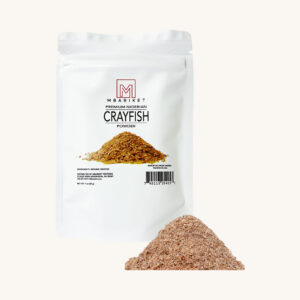
When I developed Mbariket Premium Crayfish Umami Seafood Seasoning, I wasn’t trying to create a novelty item. I was trying to create a reliable building block—a premium umami seasoning that behaves like the ingredients professionals keep within arm’s reach. In restaurant kitchens, “seasoning” often means adjusting salt and acid at the end. But the bigger trick is what happens earlier: how you lay a base that tastes already seasoned before you even add the finishing touches.
Take soup, the most honest test of a pantry ingredient. A vegetable soup is rarely bland because it lacks vegetables. It’s bland because its broth lacks conviction. Add enough time and you can coax conviction from onions, celery, and a roasted bone. But time is expensive. A concentrated crawfish flavor can do something similar in minutes: it gives the broth a deeper center so the vegetables taste sweeter by contrast and the herbs smell more like themselves.
Or consider rice, which too many people treat as neutral. Rice is a canvas, yes, but canvases can be primed. When you season rice water lightly and introduce a controlled amount of seafood umami, the result isn’t “seafood rice.” It’s rice that tastes like it belongs next to grilled chicken, roasted vegetables, or a simple fried egg. It stops being filler and starts being part of the meal.
Eggs are another quiet place to practice flavor enhancement. Scrambled eggs are mostly water and protein; they need support. A pinch of concentrated crayfish seasoning in the butter as it melts—before the eggs ever hit the pan—can turn the finished scramble into something that tastes more like a composed dish. It’s the same logic behind adding Parmesan to eggs, except seafood umami brings a different kind of savoriness, one that reads as broth rather than dairy.
Grilling has its own logic. Heat is blunt; it creates crust and bitterness as easily as it creates sweetness. The best grilled foods have internal seasoning, not just a surface rub. A small amount of umami seafood seasoning mixed into a marinade or brushed into a basting butter can reinforce what the fire is trying to do. The char tastes cleaner. The browned edges feel more intentional. The meat tastes bigger without tasting busier.
The point isn’t to turn every meal into a “flavor bomb.” The point is to give yourself a tool that makes flavor layering easier: aromatics for top notes, acid for lift, salt for clarity, fat for carry, and umami cooking ingredients for depth. When depth is missing, people keep adding salt until the food tastes salty and still somehow thin. When depth is present, you can season with a lighter hand and still get a dish that feels complete.
I’ve learned that the most valuable seasoning strategies are the ones you can repeat without drama. They work on a Tuesday, not just on a holiday. They don’t require you to change your cooking style, only to strengthen it. If you’re the kind of cook who cares about results—who reads up on crawfish seasoning blends, searches for umami seasoning that actually performs, and wants a seafood seasoning that behaves like a serious pantry staple—then you already understand the premise.
If you’d like to see what I mean in your own kitchen, you can learn more about Mbariket Premium Crayfish Umami Seafood Seasoning and pick up a jar at Mbariket.com.