I have long believed that the most reliable way to improve a familiar dish is not by adding more of what it already contains, but by introducing something that appears, at first glance, out of place. Tomato sauce is a useful case study. Most home cooks approach it with a predictable set of tools—garlic, olive oil, herbs, perhaps a touch of sugar to soften acidity. Yet what the sauce often lacks is not sweetness or brightness, but depth: a sustained savory note that holds the entire structure together.
That missing layer is typically where chefs begin to think differently. In professional kitchens, the goal is not simply to season but to build a flavor system that evolves across the palate. A small addition of concentrated umami—often from anchovy, shellfish, or dried seafood—quietly anchors the sauce without announcing itself. The result is not a “fishy” tomato sauce, but one that tastes more complete, more deliberate, and harder to replicate without understanding why it works.
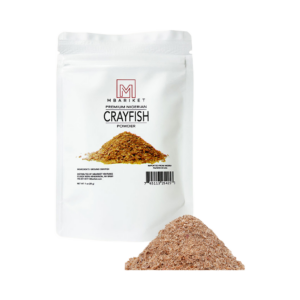
Umami seafood seasoning operates in that same space. At its core, it is a concentrated seafood seasoning made from ingredients like crayfish or crawfish, dried and ground into a fine powder. This form concentrates natural glutamates, which enhance savory perception across a dish. Unlike salt, which sharpens, or acid, which brightens, umami seasoning deepens. A small amount of crayfish powder can round out soups, reinforce sauces, add dimension to rice, enrich eggs, and bring grilled foods into better balance. It functions less as a dominant flavor and more as a structural support, the kind serious cooks rely on as a quiet but consistent pantry upgrade.
In my own kitchen, I apply this thinking to a straightforward weeknight tomato sauce. I start by warming a few tablespoons of olive oil over medium heat, then add thinly sliced garlic and let it soften without browning. A pinch of red pepper flakes follows, blooming briefly in the oil. I stir in a tablespoon of tomato paste and cook it until it darkens slightly, concentrating its flavor before adding a can of crushed tomatoes and a splash of water to loosen the texture. At this stage, I season with salt and let the sauce simmer gently for 15 to 20 minutes. The familiar version would end here, perhaps finished with basil and butter. Instead, I add a small pinch—no more than a quarter teaspoon—of concentrated crayfish seasoning. It dissolves almost instantly, leaving no visible trace. I finish with a knob of butter and a handful of torn basil, then toss the sauce with al dente pasta, reserving a bit of pasta water to emulsify everything into a cohesive glaze.
The difference is immediate but subtle. The sauce tastes less sharp, less one-dimensional. The tomato remains the lead, but there is a lingering savoriness that suggests longer cooking, better ingredients, or more technical effort than was actually applied. It is the kind of improvement that does not call attention to itself but becomes difficult to do without once recognized.
This is precisely where a product like Mbariket Premium Crayfish Umami Seafood Seasoning fits into a modern pantry. It is not there to redefine a dish, but to complete it—to provide that missing layer of depth that transforms routine cooking into something more deliberate. Used sparingly, it supports rather than competes, reinforcing the underlying structure of a dish in ways that accumulate over time.
For cooks looking to refine their everyday meals, the lesson is straightforward: the most impactful changes are often the smallest ones, applied with intention. A pinch of the right ingredient, used at the right moment, can shift an entire dish from adequate to compelling. More at Mbariket.com.